You have just read a blog post written by Jason McIntosh.
If you wish, you can visit the rest of the blog, or subscribe to it via RSS. You can also find Jason on Twitter, or send him an email.
Thank you kindly for your time and attention today.
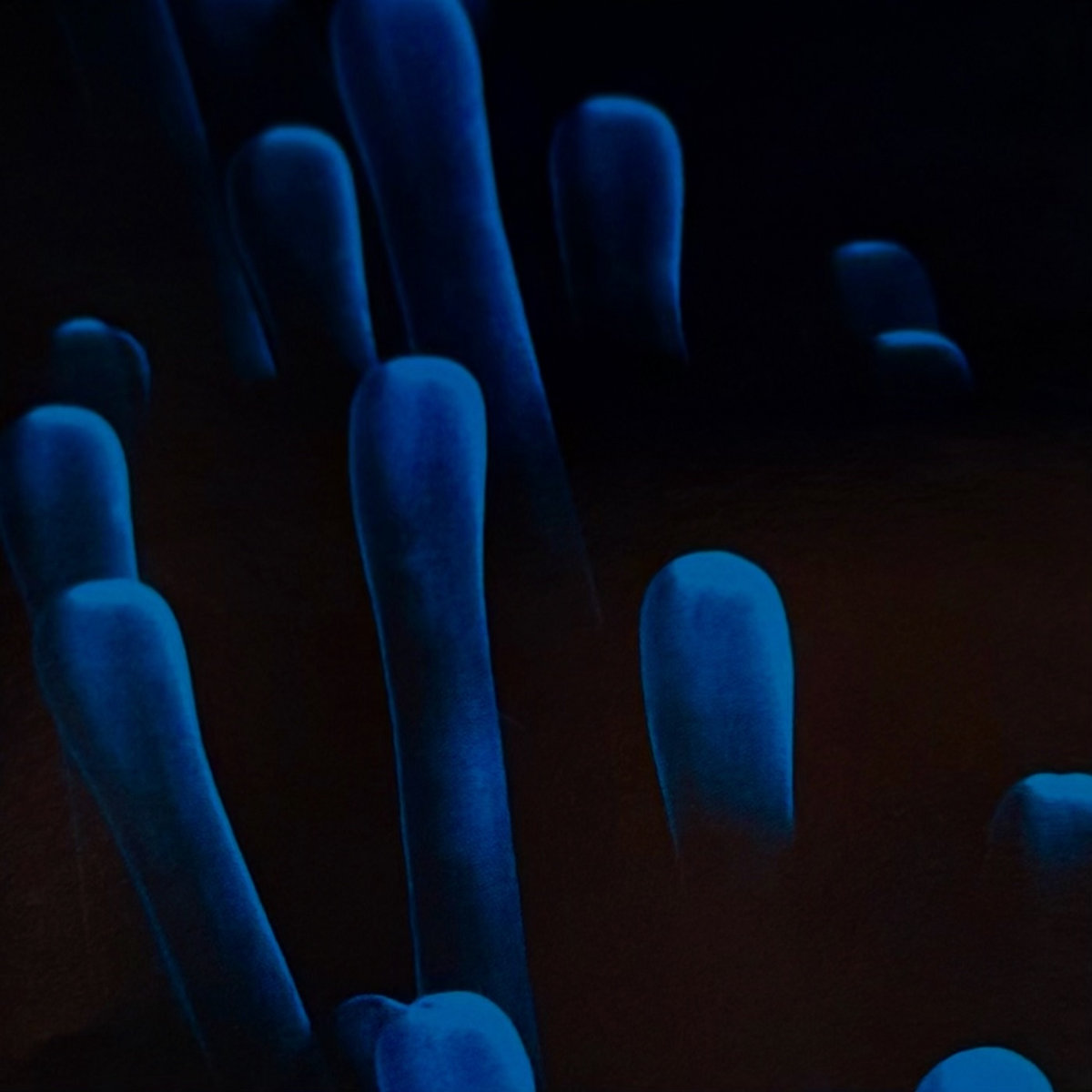
I first discovered Vancouver-based Perfume Tree in 1998, at a big Borders bookstore in Bangor, Maine, up in the second floor which was largely given over to music and movies. It had listening stations set up for albums that the store’s management had highlighted, each one with a little placard blurbing the record and artist featured. You slipped on a station’s headphones and pressed its Play button, and hidden machinery would begin the album’s first track for you. As I type this I recall more details: each station had track-selection controls available as well, and the placard often encouraged the customer to explore particular songs by track number.
I’m sorry, I got lost in a reverie there, but that’s on-topic for this artist. Late last year, in a post about Ladytron’s latest album Paradises, I wrote this:
It’s safe to say at this point that I’ve been a fan of Ladytron for longer than I’ve been an attentive fan of any other musical act, even still-active bands I discovered much earlier in life.
True enough, because I wasn’t thinking about Perfume Tree, which as far as I knew disbanded shortly after I discovered them. To return to that day in 1998: perhaps drawn to the mysterious cover art of a dimly lit blue sea anemone, I pressed the Play button and let the first track of Feeler wash over me in layers, pulling me in and under. Eight measures of a lone, chunky, synthesized bass get swallowed by a drum loop that rushes in on a cushion of backmasked horns, and finally: Jane Tilley’s vocals, exactly ethereal enough to either understand as meaningful English or hear as pure sound, at the listener’s discretion, a kind of aural Necker cube.
I immediately loved everything about this album’s sound, but I think it’s this bistable quality of the vocals that all but obsessed me, at the time. Feeler spun in my home CD player countless times, that year and the next, as I transformed myself from a post-graduate drifter to a semi-competent software engineer. Something in that 80 minutes of lush, filtered mix of synthesized waveform and human voice, played on repeat, encouraged me to reconnect with my flunked-out computer-science past, buckling down and learning how to use my Mac for something other than games, and entering into a profession that I longed for, one I thought that I’d lost.
I looked for new Perfume Tree releases for years after that, in the way one would at the time: flipping through the “P” section in the shelves of every record store I encountered. I never found anything. In the early 2000s, a housemate with an affinity for MP3 trading did manage to score a digital copy of a lifetime away from 1995, and I would give that album at least as many repeat listens as Feeler, as I toiled at my various early-career programming jobs. Somewhere in there I also found a half-constructed website for Veloce, a followup project from the same talent which offered a couple of demo tracks as MP3 files: absolute treasures.
For reasons I can’t say, I wouldn’t discover that Perfume Tree’s entire 1992-1999 discography was on Apple Music until Deep Covid. (I suspect that the band is simply so obscure that not even Apple had its full catalog until many years after the iTunes empire was established.) Discovering that cache helped me get through my subsequent years working full-time at a giant technology corporation. I love all of these early albums but my favorite is dust, the band’s very first record, headlined by the velvety “nightmare jacket”: all bass and clicks and twisting, spidery whispers.
Cursory research told me, at the time, that Perfume Tree did indeed disband soon after my encounter in the Bangor Borders. Other than the 1999 remix album Felt and two Veloce albums from 2000 and 2006—the latter of which shipped so subtly that I didn’t know about it before today—the individual members hadn’t recorded any musical work in any place that I could see. It didn’t bother me; in a way, it added an additional and pleasurable melancholic patina to their nineties albums, as I played them again and again to fuel my work and thinking.
So you can understand my shock when I awoke one morning earlier this month to find, among my iPhone’s while-you-were-sleeping notification stack, a message from Apple Music that Perfume Tree had released a new album called dark gift. In fact, this has been their second release since they quietly reformed last year, an event which I had missed completely. After a quarter-century gap during which I slowly unearthed the obscure band’s older work, Perfume Tree casually reappears with new music that really does feel like a resumption of where they left off—or rather, it sounds more like a new branch from their mid-nineties work, grounded in more natural drum and guitar sounds rather than the almost pure synth of Feeler and beyond. And I sink into it so easily.
I was inspired to write this post because of a very particular joy: knowing that I’d heard the particular driving drum loop of “the sea the sea” before, and flipping through the Infinite Jukebox we all enjoy today let me quickly find the loop at the bottom of “sea” from 1994’s The Sun’s Running Out. Discovering this link felt like confirming a checksum, an electrical connection through sun and sea and salt: longing for something a lifetime away, and yet present right now.
There are so many ways that the timing of dark gift uncannily echoes my stumbling across Feeler. The world today feels very different from the boom times of the late 1990s. And yet, in the respective summers of both 1998 and 2026, I am two years out of my most recent full-time occupation (college then, corporate work today), watching deeply strange technologies rapidly envelop the world to uncertain ends, and feeling unsure about what I should do next. What am I to make of the re-emergence of music which, up until two weeks ago, I thought existed only in a pre-9/11 world? Maybe I’ll start to have an inkling after listening to dark gift many, many times, paying careful attention to the tides.
Next post: Apple Freeform is good for mind mapping
Previous post: Claude-favored colors as a vibe-coding tell
To share a response that links to this page from somewhere else on the web, paste its URL here.
If you enjoy Fogknife, you might also like these websites. (See also an expanded edition of this list.)
 jmac@jmac.org
 @jmac@masto.nyc