You have just read a blog post written by Jason McIntosh.
If you wish, you can visit the rest of the blog, or subscribe to it via RSS. You can also find Jason on Twitter, or send him an email.
Thank you kindly for your time and attention today.
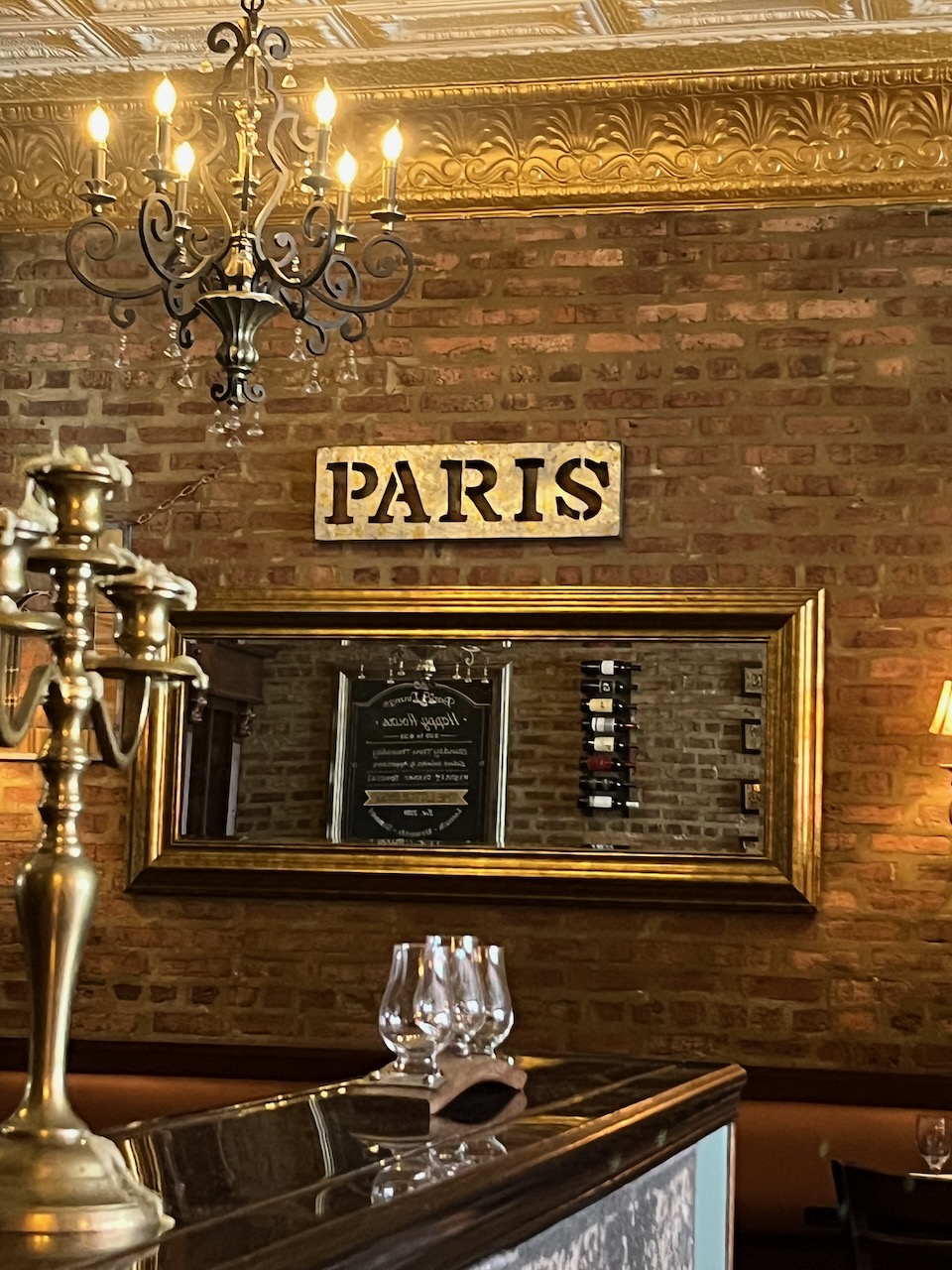
I furtively took this photograph inside a certain European-style cafe near Chicago. The food was quite all right, but this sign reading “PARIS” over a mirror on one wall made me thoughtful.
It’s very likely that multiple people were involved in the design, manufacture, selection, purchase, and installation of this sign, and apparently zero of them noticed that the “S” was upside-down. Or, anyway, nobody both noticed and cared enough to stop the process that ended with the sign’s permanent place on the interior wall of this cafe, which mildly surprised me for a place charging $20 for a beet salad. (Which, I reiterate, was quite good.)
I can only assume that a lot of people just don’t care enough about typography to immediately notice when a nearby “S” is upside-down, and that this is probably very normal. I performed a poll of this by turning to my partner—a leader in the field of contemporary information science—and showing her this photograph and asking her to name what was wrong with it and she could not. Which rather suggests that I’m the one with the problem, here.
But before all that, as I studied the sign while enjoying my salad (two kinds of beets and pillowy-soft chèvre, really nothing to complain about), I did contemplate how similar this situation felt to seeing horrendously sloppy-obvious AI-generated artwork in public and commercial spaces, and wondering about the number of people who had to decide “Yes, this looks fine” in order to create that bodega sign or public-service poster or restaurant menu cover or whatnot in every case.
While frontier models seldom fall into the supernumerary-finger traps they famously did years ago, I still find the visual “signature” of wholly AI-generated art unmistakable. I don’t claim that this is some unique or bizarre power I have. But it’s quite clear that, just like someone sees a stenciled letter whose curves all go in the correct direction and concludes “Yes, this meets all the qualities of an ’S’, and therefore it can go on my cafe wall exactly as shown” with no further critical examination, someone else sees the output of DALL-E or whatever and they say “Ah, good, this picture matches the prompt that I typed”, and another two or three people say “Sure, I recognize the objects depicted in this image, no further cogitation necessary” and off to the print shop it goes.
Not to say that these two groups are identical; my spouse asserts to the Fogknife readership that she can spot AI art a mile away. But from now on I think I might remind myself to not feel automatically insulted every time I see obviously AI-generated art, like someone’s trying to pull a fast one on me. In a lot of contexts, I think that the art is there simply because literally nobody involved in its production or installation sees the problem with it.
Next post: On Ligotti, Watts, time, and the fractal self
Previous post: Plerd updates, and AI disclosures
To share a response that links to this page from somewhere else on the web, paste its URL here.
If you enjoy Fogknife, you might also like these websites. (See also an expanded edition of this list.)
 jmac@jmac.org
 @jmac@masto.nyc